A Framework for Software Development Excellence

May, 2020

Abstract:

We describe a broad and unifying framework of the most important traits, principles, and practice areas supporting the achievement of software development excellence. For software development excellence, we broadly emphasize both the definition of a product that effectively meets stakeholder needs (“building the right product”), and designing and constructing an effective and reliable solution for satisfying those needs (“building the product right”). One objective of the framework is to help unify different software communities, such as the Agile community and the Team Software Process community, who have independently developed approaches that have both much in common and also some important differences. Another objective is to provide guidance to help organizations identify gaps in their current practice and develop a roadmap for improvement. We stress the importance of commitment, participation, preparation, simplicity, iteration, continuous feedback, regular adjustment, objectivity, openness, communication, direct interaction, and continuous improvement. We outline the most important practice areas of product management, technical excellence, quality management, teamwork, project management, and process management.

About the Presenter 

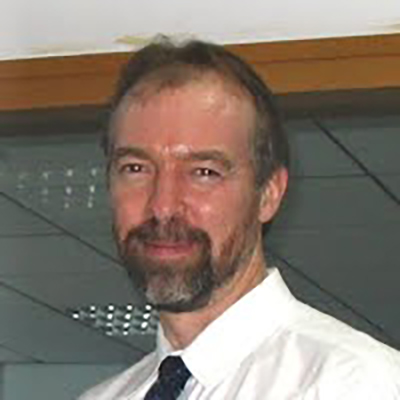
Darryl L. Davis is the Principal and founder of Davis Systems, an improvement consulting firm that helps develop agile high-performance software teams. He is a former SEI Certified TSP Mentor Coach and a former SEI Authorized PSP-TSP Instructor. He served as an SEI Authorized Capability Maturity Model Integration Instructor and for 13 years as an SEI Authorized Lead Appraiser. He is a Project Management Institute Certified Project Management Professional, and a scrum.org certified Professional Scrum Master and Professional Scrum Product Owner. Prior to founding Davis Systems in 1993, he was a Senior Technical Manager at Intergraph Corporation. At Intergraph and at Chrysler Corporation, he developed software ranging from commercial desktop computer-aided engineering tools to custom real-time embedded systems. He holds a Master’s degree in computer science from the University of Alabama in Huntsville and a Bachelor of Computer Engineering degree from Auburn University. He is a Senior Member of the Institute of Electrical and Electronics Engineers and its Computer Society, a member of the Project Management Institute, and a Senior Member of the American Society for Quality.

Past Presentations

Why Battle-Tested Software Engineering Still Matters in the Age of AI

The June 2026 Tech Talk was presented by Mario BenitezAbstractWhile use of AI in developing and maintaining software is increasing globally, this use is relatively new, and proven practices for using AI effectively are still emerging. There are different ways to use...

The SEA Data Warehouse

The April 2026 Tech Talk announced the availability of the SEA Data WarehouseAbstractThe Data Warehouse Working Group was initiated in September 2022, with the purpose of advancing the state of the practice and the art of software engineering by providing a source of...

Agentic Coding: The Earthquake That Topples the Software Factory

The March 2026 Tech Talk was presented by Larry MaccheroneAbstractThe tectonic plates beneath software development are shifting. They are moving too fast to predict what the landscape will look like when the earthquake hits. Still, we are sure that the coming...

Why Program Increment Estimates Miss: Hidden Variables for Planning

The February 2026 Tech Talk was presented by Dr. Bill Nichols and Dr. Tapajit Dey AbstractWhat is a credible range of dates for when the work in a product increment might finish? Software development work includes many sources of uncertainty, including the size of the...

Lessons from Using LLMs to Check Software Security

The January 2026 Tech Talk was presented by Dr. Mark ShermanAbstractLarge language models (LLMs) like ChatGPT are transforming the landscape of software development and evaluation, although claims of AI replacing programmers are often overstated. This session delves...

Process Isn’t a Four-Letter Word

The November 2025 Tech Talk was presented by David TumaAbstractAgile methods emerged as a direct rebellion against the heavyweight processes of the 1990s. And the Team Software Process (TSP) did too, by brilliantly reimagining process in a lightweight, agile way that...

Agile Strategy: Onward and Upward

The September 2025 Tech Talk was presented by Linda Parker GatesAbstractThis talk describes the application of Agile principles to strategic planning. It explores how applying balanced Agile values — such as prioritizing individuals and interactions, delivering...

Engineering of Complex Systems at NAVAIR: We Must Do More With Less!

The June 2025 tech talk was presented by Jeff SchwalbAbstractAt NAVAIR, we are experiencing a dwindling engineering workforce at the same time that we are trying to meet increasing demands for support to our warfighters. We have a combination of efforts uplifting the...

Victims vs. Victors: Navigating Career Uncertainty with Resilience

The May 2025 tech talk was presented by David VanEppsAbstractSetbacks are inevitable. Travel freezes, budget cuts, hiring slowdowns, layoffs — challenges like these can shake our sense of stability. While we can’t always control what happens, we can control how we...

Applying STPA to Improve Safety and Reliability of AI-Enabled Systems

The April 2025 tech talk was presented by Timothy DavisonAbstractThis talk explores the application of System-Theoretic Process Analysis (STPA) to enhance the safety and reliability of AI-enabled systems. STPA provides a structured and scalable approach to identifying...

Drive Improved Holistic Business Results with Lean/Agile Practices

The February 2025 tech talk was presented by Fred KoosAbstractAgile practices have roots in Lean Thinking and the Toyota Production System. These are holistic approaches to improve business results. As the word “Agile” was coined in 2001, the applications were...

Clarify Your Acceptance Criteria with GIVEN-WHEN-THEN

The January 2025 tech talk was presented by Matt McConnellAbstractGherkin, also known as GIVEN-WHEN-THEN, is an effective method for writing Acceptance Criteria at many levels in software development. It treats the software as a black box, focusing on the inputs,...

A Powerfully Simple Planning Framework

The December 2024 tech talk was presented by Dr. Brad HodginsAbstractUsing this very effective five-step approach, teams and individuals can create a detailed plan that will enable them to track their progress as they execute that plan. Organizations run on schedules...

Share This