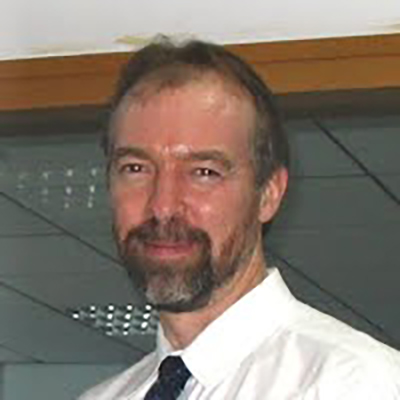
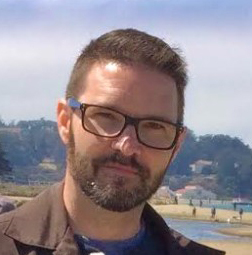
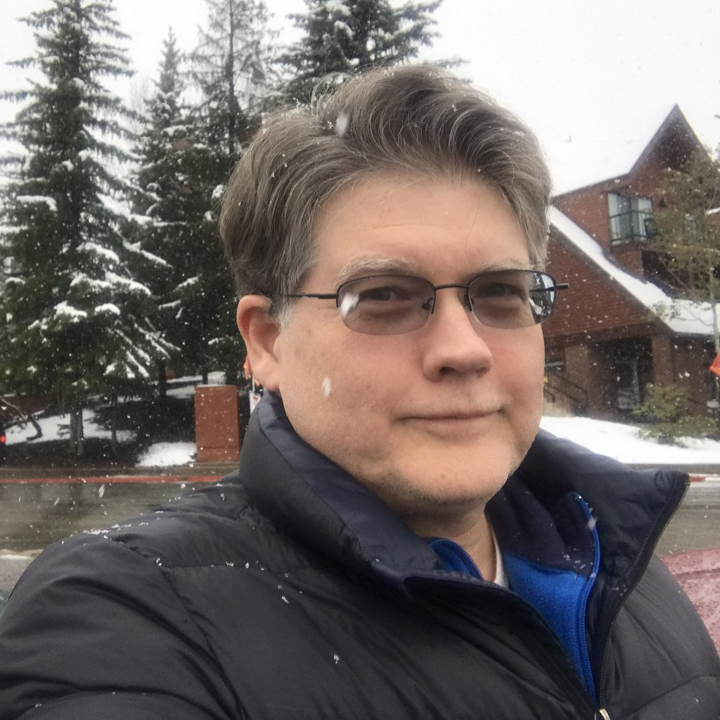
The February 2020 tech talk was a panel presentation by Darryl Davis, David Webb, and Scott Pavetti
Abstract:
The goal of this talk is to better understand Agile teams’ strengths and problems so that we can better identify practices that can aid them the most. Darryl will give a brief Agile and Scrum overview, present a comparison and contrast to TSP℠, talk about implemented Agile with ideas from TSP to address the weaknesses, and walk through a success story. Dave will add details about how he has implemented Agile with ideas from TSP. Scott will tell us about his experiences with some Agile project failures.
About the Presenters
Darryl L. Davis is the Principal and founder of Davis Systems, an improvement consulting firm that helps develop agile high-performance software teams. He is a former SEI Certified TSP Mentor Coach and a former SEI Authorized PSP-TSP Instructor. He served as an SEI Authorized Capability Maturity Model Integration Instructor and for 13 years as an SEI Authorized Lead Appraiser. He is a Project Management Institute Certified Project Management Professional, and a scrum.org certified Professional Scrum Master and Professional Scrum Product Owner. Prior to founding Davis Systems in 1993, he was a Senior Technical Manager at Intergraph Corporation. At Intergraph and at Chrysler Corporation, he developed software ranging from commercial desktop computer-aided engineering tools to custom real-time embedded systems. He holds a Master’s degree in computer science from the University of Alabama in Huntsville and a Bachelor of Computer Engineering degree from Auburn University. He is a Senior Member of the Institute of Electrical and Electronics Engineers and its Computer Society, a member of the Project Management Institute, and a Senior Member of the American Society for Quality.
David R. Webb is a Senior Operations Program Analyst at Kihomac, Inc. He is currently working as an Agile coach to improve the engineering processes of the A-10 Operational Flight Program team in the 309th Software Engineering Squadron at Hill Air Force Base, Utah. Prior to this assignment, Dave worked as a government project management and process improvement specialist with 309 SWEG. He has over 33 years of technical, program management, and process improvement experience on Air Force software. Dave is a certified Scaled Agile Framework (SAFe) Product Owner, Scrum Master, and Agilist. Previously, he was authorized by the Software Engineering Institute as an instructor for the Personal Software Process, as well as a Team Software Process coach. He has worked as an Air Force manager, SEPG member, systems software engineer and test engineer. He is a frequent contributor to technical journals and symposiums, and he holds a bachelor’s degree in Electrical and Computer Engineering from Brigham Young University.
Scott Pavetti is a member of the faculty at Carnegie Mellon’s Master of Software Engineering professional program. Prior to joining the faculty, he was a tech lead at the Software Engineering Institute in the Security Automation directorate within CERT where he led a small, multi-disciplinary team that operates two compute laboratories, develops software solutions for government customers, and consults on software engineering best practices.
He’s worn a number of job titles, such as research programmer, senior software engineer, tech lead, and software quality engineer. Within those roles, Scott has accumulated broad set of product development experiences ranging from mobile and desktop development, small IT deployments, embedded, to IoT systems. As a software quality engineer, he developed quality plans, software development plans, conducted requirements workshops, and even architected a few products. He also has two patents related to indoor navigation and their associated methods.
Not all of Scott’s experiences are technical, he spent two years as a Community of Practice Leader in Software where he worked with 50 engineers in the US and Germany to develop better practices and share knowledge. He’s also trained engineers in software architecture, design, requirements, and testing practice. He understands that being a software engineer takes more than technical ability, that it takes leadership as well.
He got his undergraduate degree in Computer Engineering from the University of Pittsburgh and a master’s degree in Software Engineering (MSIT-SE) from Carnegie Mellon University.
He likes bicycling on roads and trails in rural Pennsylvania and landscape photography.
℠ Personal Software Process, PSP, Team Software Process, and TSP are service marks of Carnegie Mellon University. The Software Excellence Alliance is not affiliated with Carnegie Mellon University.