Abstract:
We’ve all worked on teams where it is impossible to find the latest files, emails get lost, people get left off (or on!) meeting notices and email chains, and worse. Things get even more chaotic when team members are all volunteers and everything is virtual.
Working groups are critical to the SEA; they are the mechanism that the Alliance uses to make progress. The SEA has created an infrastructure and a communications plan that help WGs to be successful by applying the principles upon which the Alliance is based, hence walking our talk. WGs that use these principles have made tremendous progress.
This Tech Talk will walk through the SEA working group infrastructure so we can all be effective working group leaders and members. We will also highlight the best practices we’ve found, that you can apply to support the success of other virtual/remote teams (at your work and elsewhere).
This talk includes the following topics (each individually available on YouTube):
- Introduction
- Navigating the SEA Google Drive
- Managing Working Group
- Running Effective Virtual Meetings and Communicating Effectively
- Concluding a Working Group
- Templates and Resources
About the Presenters
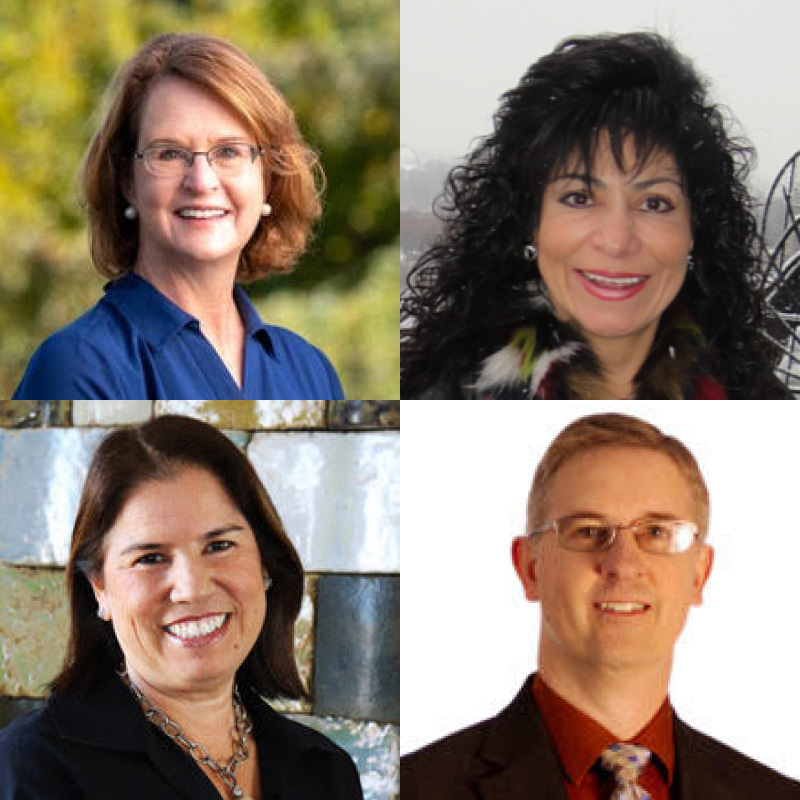
Julia Mullaney has been involved with software excellence since starting her career at IBM in 1988. Julia was a key contributor to the Personal Software Process℠ (PSP℠) and Team Software Process℠ (TSP℠) through the development of training, certification, licensing, and applied research at leading software organizations. She was fortunate to take the first PSP class from her mentor, Watts Humphrey. Julia’s passion is software excellence, and she has been channeling that passion into growing the Software Excellence Alliance (SEA) as the SEA Executive Committee Leader and as a member of SEA.
Rosalba Aguilar collaborated for twenty years as CIO, CTO, and member of the board of directors for XEROX and EDS companies, including management of all information technology areas with inter-functional teams of up to 200 employees. Since 2007, she has been at Towa Software as COO and Customer Success Manager for business software development. She drives innovation and accountability for the creation, evolution, and implementation of high-quality information systems, digital transformation ambassadors, and high-performance team building. Her teams guarantee customer satisfaction, on-time delivery, and high-quality development through co-innovation, co-creation, flawless execution processes, and agile practices. She received a BS in biomedical engineering, with an IT degree from Universidad Iberoamericana, and a Masters in Business Management from IPADE Institute.
Steve Shook, Director of Software Engineering and Quality at Ishpi Information Technologies (ISHPI), brings more than 25 years of experience in software engineering and software management. He is one of the principal architects of ISHPI’s award-winning Agile High Velocity Development℠ software development methodology. As an experienced instructor, coach, consultant, and subject matter expert, he leads and mentors software teams to achieve exceptional cost, schedule, and quality performance in order to achieve customer business goals. As part of the SEA, he draws inspiration — and hopes to inspire others — to continuously advance the state of the practice of software engineering. Stephen is currently serving as a member of the SEA Executive Team.
Mary Walker is the owner and principal of Leaf Spring LLC, a Knoxville-based consulting company that specializes in helping non-profits to intensify their impact. Before this, Mary served as the Director of Development at the Knoxville Museum of Art. She has worked previously as the National Product Manager for Caramel and Candy at Kraft Food Ingredients, as a Strategic Planning and Development Manager for Holiday Inns, Inc., and as the Marketing Manager for her family’s automotive businesses. She earned her bachelor’s degree from the University of Tennessee and her MBA from Vanderbilt University. Mary has served on several local non-profit boards including the Episcopal School of Knoxville, Cancer Support Community East Tennessee, and the University of Tennessee Haslam School of Business Management and Entrepreneurship.